
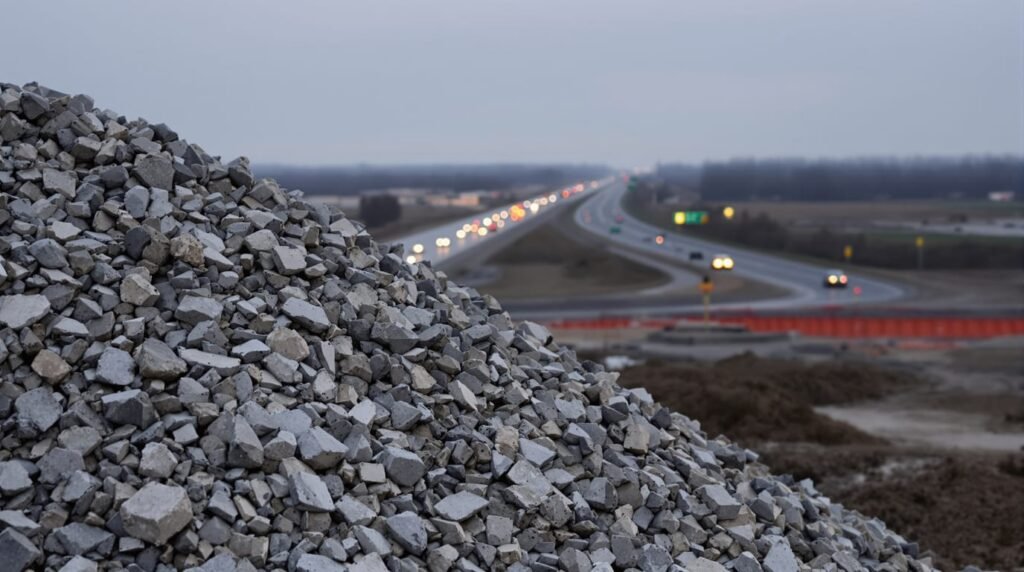
For many contractors, hauling construction waste off site feels like a normal, unavoidable part of doing business. Trucks load up, head to a landfill or recycling yard, and the job moves on. But behind that routine is a stack of hidden expenses that quietly eat away at margins. Fuel, labor, tipping fees, downtime, and scheduling delays all add up fast. This is where an impact crushing machine changes the economics of a job entirely. By keeping material on site and processing it immediately, an impact crusher turns waste into usable material and eliminates the biggest cost driver most crews never fully calculate.
Let’s break down where hauling costs really come from and how on-site crushing equipment removes them from the equation.
The Real Cost of Construction Waste Hauling
Most contractors think about hauling costs in simple terms: truck rental and disposal fees. In reality, construction waste hauling costs are far more complex.
Every load of waste involves:
- Labor hours to load and transport material
- Fuel costs that fluctuate with distance and market prices
- Tipping or landfill fees that increase year over year
- Wear and tear on trucks and equipment
- Lost productivity while crews wait for trucks to return
On busy job sites, hauling can become a bottleneck. Crews pause work because debris piles up or trucks are unavailable. These delays rarely show up as a single line item, but they directly impact timelines and profitability.
When projects involve concrete, asphalt, or masonry, hauling waste often costs more than the material itself. That is why more contractors are reevaluating how they handle debris altogether.
Why Off-Site Disposal Is a Structural Inefficiency
Off-site disposal assumes waste has no value. In modern construction, that assumption no longer holds. Concrete and asphalt are not trash – they are raw materials waiting to be reused.
Sending recyclable material off site creates three inefficiencies:
- You pay to remove material.
- You pay again to buy replacement aggregate.
- You lose control over scheduling and availability.
This double-payment cycle is one of the biggest drains on project margins. It also exposes contractors to rising landfill fees and stricter disposal regulations. Many regions are already limiting how much construction debris can be dumped, pushing costs even higher.
How On-Site Crushing Equipment Breaks the Cycle
On-site crushing equipment flips the waste equation upside down. Instead of exporting debris, material is processed where it is generated. Concrete, asphalt, and masonry are crushed into reusable aggregate within hours, not days.
This approach eliminates or dramatically reduces:
- Trucking requirements
- Landfill and tipping fees
- Scheduling delays caused by hauling logistics
Material that once left the site now stays in circulation. It can be reused as base, subbase, backfill, or even sold to nearby projects depending on quality and demand.
Impact Crushing Machines and Cost Savings
One of the biggest drivers behind adoption is impact crushing machine cost savings. Impact crushers are particularly well suited for recycling applications because they combine crushing and shaping in a single process.
Compared to other crusher types, impact machines:
- Require less pre-sorting of material
- Produce consistent, cubic aggregate
- Handle mixed feedstock efficiently
This means fewer machines on site and lower operating complexity. When evaluating total cost, the savings extend beyond fuel and disposal. Maintenance, labor coordination, and project duration all benefit from simplified workflows.
Over the life of a project, these savings often exceed the cost of renting or owning the crusher itself.
Reducing Disposal Costs at the Source
A key advantage of impact crushing is the ability to reduce construction waste disposal costs at the source. Every ton processed on site is a ton that does not require transport or landfill handling.
For contractors working in areas with high disposal fees, this reduction alone can justify the investment. In some regions, tipping fees are high enough that crushing pays for itself in weeks, not months.
Beyond direct savings, reducing disposal volumes also improves compliance with environmental regulations and sustainability goals. This can be a deciding factor in winning bids, especially for public or infrastructure projects.
Mobility Matters: Crushing Where the Work Happens
A mobile impact crushing machine adds another layer of efficiency. Mobility allows contractors to move the crusher between job sites or reposition it as work progresses. This flexibility is critical for projects with limited space or phased demolition schedules.
Mobile units offer:
- Fast setup and teardown
- Minimal site preparation
- Easy relocation without specialized transport
For urban projects or linear jobs like road reconstruction, mobile crushers keep material processing aligned with the pace of work. There is no need to stockpile debris or wait for hauling capacity.
Turning Waste Into a Reusable Resource
Impact crushers do more than reduce costs – they change how contractors think about material flow. Crushed concrete and asphalt become part of the project rather than a byproduct.
Common reuse applications include:
- Road base and subbase
- Utility trench backfill
- Temporary access roads
- Landscaping and grading material
By integrating construction waste recycling equipment into daily operations, contractors gain material independence. They rely less on external suppliers and avoid price volatility in aggregate markets.
In some cases, excess material can even be sold or reused on future projects, creating an additional revenue stream.
The Hidden Time Savings Most Contractors Miss
Time is often the most underestimated cost in hauling waste. Waiting for trucks, coordinating disposal schedules, and managing stockpiles all slow progress.
On-site crushing removes these friction points:
- Material is processed continuously
- Crews work without interruption
- Project sequencing becomes more predictable
Shorter project durations reduce overhead costs and free up crews for the next job sooner. Over a year, this time efficiency compounds into significant financial gains.
Environmental Benefits That Also Save Money
While sustainability is often framed as a regulatory or ethical issue, it also has a direct cost impact. Recycling material on site reduces emissions from trucking and minimizes landfill use.
Many clients now value contractors who can demonstrate waste reduction strategies. Using on-site crushing equipment strengthens bids by aligning with environmental targets while simultaneously lowering operating costs.
This combination of economic and environmental benefits is why impact crushing machines are becoming standard on progressive job sites.
Final Thoughts
The cost of hauling waste is rarely as simple as it appears. Once fuel, labor, delays, and disposal fees are fully accounted for, off-site hauling becomes one of the most expensive parts of a project. Impact crushing machines eliminate these hidden costs by keeping material on site and in use.
Through lower construction waste hauling costs, meaningful impact crushing machine cost savings, and the ability to reduce construction waste disposal costs, contractors gain control over both budgets and schedules. Add the flexibility of a mobile impact crushing machine, and the case becomes even stronger.
In an industry where margins are tight and timelines matter, investing in modern construction waste recycling equipment is no longer just an operational upgrade. It is a strategic advantage that turns waste into value and inefficiency into profit.