
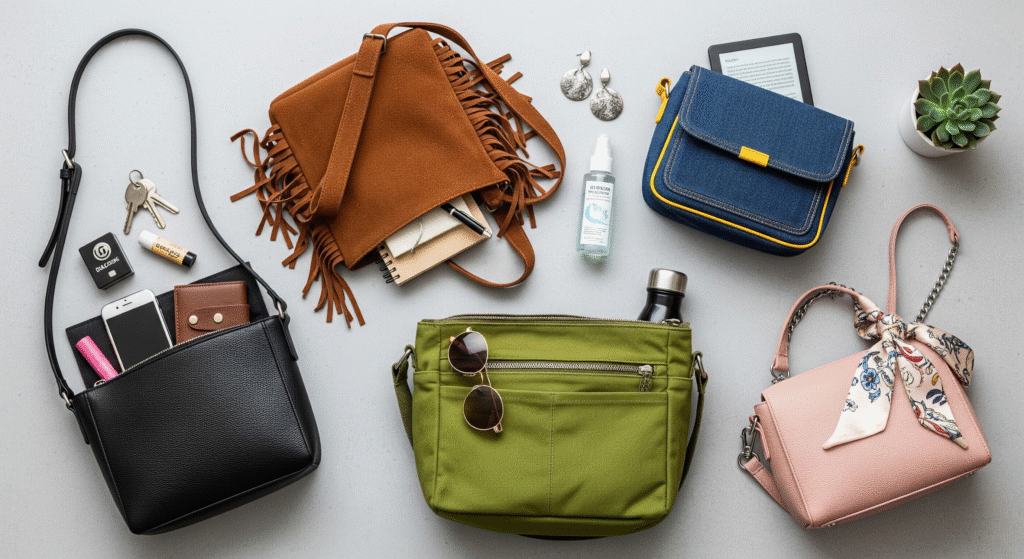
Selecting a small shoulder bag for everyday use should not merely be based on whether it looks good on a screen or a shelf. The ideal bag becomes a daily ritual element; it stores your necessities, defines the ease of your day, and silently speaks of aesthetics & individuality. A small shoulder bag should not just be a fashion appeal but it should be comfortable, enduring and useful when wisely chosen. Here is a common sense human guide to help you make a wise choice before you buy ‘the perfect shoulder bag’.
First, establish attainable expectations.
Small shoulder bags are not built to carry everything and this is more of a strength than it is a weakness. Their small size makes one plan necessary items – phone, wallet, keys, lipstick or sanitizer. This eases the movement of the person carrying the load, and makes it light weight. But ‘small’ does not mean impractical. It should comfortably hold all the daily necessities without constriction, overstretching, or uncomfortable bulkiness.
More Compartments Is Not As Important As Structure
Although many guides emphasize having several compartments, it is rarely necessary to have several pockets in a small bag. Finally, to store valuables, one interior zip pocket that is secured and one external zip pocket are enough. It will be harder to quickly get the desired result if a small silhouette has many details that affect efficiency and usability.
Strength, Length, and Position of Strap
This is perhaps the most important element. The strap of a shoulder bag should be long enough so that it can be placed under the arms securely and strong enough to hold everyday weights without tearing or stretching. Thin straps may cause pain as they dig into the shoulder and keep slipping off. The ideal bags are those that “wrap around the shoulder like a second skin and stay put without exerting pressure”
Accessibility: An Opening Line That Is Comfortable
A small bag with a stiff or small opening can easily irritate people. It should be possible to slide your hand in and out of the opening effortlessly. Zippers and other secure fasteners are necessary, but accessibility shouldn’t be sacrificed, make sure it doesn’t make it difficult to access your things. When you’re traveling, shopping, or commuting, a well-designed bag achieves that balance—safe but not restrictive.
Material Selection Depends on Lifestyle & Maintenance
Material selections should not just be aesthetically pleasing but also mirror your way of life. If your daily routine includes dusty roads, crowded transportation, or outdoors exposure, then washable materials such as nylon or treated canvas are invaluable. Further, many washable bags now have stylish, modern designs, so they are no longer uninteresting. Leather or semi-leather bags give a more refined look making them ideal for formal environments like offices, cafes, or social settings.
Comfort is not an added advantage but a feature of design.
The color, texture, and design of a bag seem irrelevant if it causes discomfort. Stark designs, sharp edges, or heavy bases tend to make everyday use tedious. They prefer balanced weight distribution, clean edges, and slightly padded straps. A comfortable bag should be imperceptible and supportive at the same time when carried on the shoulder.
Keep It Neutral (Unless You’re Feeling Bold)
Neutrals are often preferred as they help in making life simpler by having an everyday bag that goes well with everything, even though bright colors and prints can be fun. Most outfits and seasons pair well with colors such as black, beige, tan, white, or navy. They also reduce decision fatigue. Neutral stands for adaptable, timeless, and reliable, not boring.
Hardware and Closure’s Quality
Often, minor details such as zippers, clasps, and metal fittings are underestimated by clients, but they have a significant influence on the durability of a bag. Durability is reflected in strong metal hardware and zippers that glide smoothly. Cheap fittings are usually the first ones to break, and here you can avoid early replacements.
Fit the Bag into Your Daily Routine
Finally, be sure to consider honestly when and where you’ll use the bag. Long commutes or intense workdays may not be suited for a quick coffee run bag and vice versa. This one should be based on your timetable throughout the day, including meetings, running errands, and congested modes of transportation. However, the appropriate bag does not weigh you down but adjusts to your day.
Therefore, choosing the best small shoulder bag should not be a complicated task. Consider factors like simplicity in usage, storing, strength of straps, comfort, and material compatible with your lifestyle. When these components are combined, a women’s shoulder bag is created which “fits” into your daily routine perfectly.